
What Are Book Pre-Orders and Why Do They Matter?
If you’ve ever wondered if seeking book pre-orders is worth the effort, you’re not alone. Pre-orders are one of the most talked about and most misunderstood pieces of a solid book launch strategy.
At their core, book pre-orders allow readers to purchase a book before its official release date and receive it automatically on launch day. For authors, though, pre-orders play a larger role in marketing a book, helping to build early momentum when visibility matters the most.
Because of that, pre-orders often come up in conversations about how to promote your book. When used intentionally, they can support author discoverability, strengthen launch week sales, and complement other marketing initiatives. BUT! Strong pre-orders alone are not a guarantee of your book’s success. Pre-order campaigns work best as part of a larger book launch strategy rather than as a standalone effort.
In the sections ahead, we’ll break down how book pre-orders work, when they’re worth using, and how traditional, self-published, and hybrid authors can decide how to approach pre-orders with their next launch.
How Book Pre-Orders Work (At a High Level)
When a reader pre-orders your book, they’re placing an advance purchase through a retailer such as Amazon, Barnes & Noble, Apple Books, Kobo, or an independent bookstore. The order is held until your official book launch date, then shipped on your book’s release date.
From a book marketing perspective, timing is what matters most here. For reporting to bestseller lists, pre-orders are counted toward your launch-week sales rather than the day the order is placed. That’s why we often use pre-orders as part of a larger book launch strategy: they help focus sales activity during a short, high-impact window.
Where Book Pre-Orders Happen
Most major retailers support book pre-orders, though the setup and rules may vary by platform:
- Amazon (print, ebook, and audiobook) Authors who are self-publishing and want to set up their print books for pre-order on Amazon will need to distribute using IngramSpark.
- Barnes & Noble (online and in-store ordering)
- Independent Bookstores Self-published authors using IngramSpark for distribution will be available for pre-order through independent retailers, including Bookshop.org
- Ebook retailers like Apple or Kobo (generally more flexible and pre-order friendly)
What Book Pre-Orders Do for Your Launch
Authors can use pre-order campaigns to support their intentional book marketing plans. An effort to sell your book through pre-orders can help by:
- Signaling early interest to retailers
- Supporting discoverability around launch
- Setting other marketing efforts up for success (like ads and email campaigns)
Common Myths About Pre-Orders
Myth: Pre-orders hurt my chances of becoming a bestseller.
Truth: Pre-orders are important for authors who want to become national bestsellers, but they can make it harder for you to be a bestseller on Amazon during launch week.
Myth: More pre-orders automatically mean a successful launch.
Truth: Pre-orders are only one part of the marketing required for your launch.
Amazon rankings change daily or hourly, so pre-orders on Amazon affect your bestseller status during the day each other is placed. Any pre-orders, whether on Amazon or other retailers, are helpful for weekly bestseller lists, like USA Today or the New York Times Bestseller list, because any pre-orders are added to launch week orders for that week’s reporting.
How pre-orders work in practice also depends on how you publish. Traditionally published authors, whose books are printed and warehoused, typically need to secure pre-orders so retailers will order them. Self-published and hybrid authors can consider their options when choosing a plan for pre-orders, especially when they are distributing their books through print-on-demand only.
Understanding how pre-orders work is just one part of the equation. Next, we’ll explore why pre-orders matter for book marketing, and when you should prioritize them as part of your book launch strategy.
Why Pre-Orders Are Important for Book Marketing
At this point, it should be clear that book pre-orders aren’t about early sales alone. Their real value shows up when they support the overall big picture of a book launch.
Within a well-planned book launch strategy, pre-orders help create structure and focus, giving early marketing efforts something to aim towards, rather than loading everything into launch week. Book pre-orders help you align your messaging, outreach, promotions, and more as you lead up to launch.
How Pre-Orders Support Broader Launch Goals
Book marketing begins the moment you start writing your book. It’s important to know this as you prepare your pre-order campaigns and other book marketing initiatives.
Here are some ways book pre-orders work with larger marketing goals:
- Bestseller lists (when applicable)
For lists that count pre-orders towards launch week sales (like USA Today), early sales can push you into the running for securing bestseller status. One note: Rules vary widely by list and retailer, so pre-orders should be seen as one aspect of the strategy when bestseller status is a goal. - Media and influencer outreach
Want to reach a greater audience? Having your book available for pre-order allows others in your network and beyond to learn about the book in advance of launch day, and sparks interest that could lead to endorsements, media mentions, book reviews, and more. - Launch week promotions
Fueling interest in book pre-orders often requires giving something back. Incentives like price reductions, access to exclusive content (ebooks, videos, study guides), and limited-time bonuses go a long way to getting others to buy your book before it’s released.
When Pre-Orders Matter Most (And When They Matter Least)
Pre-order campaigns will be most impactful when you have some way to reach readers. That can be an email list, an engaged social media audience, or established media support. They’re also useful if your goal is to concentrate attention during a short window versus driving slow, long-term sales over time.
Pre-order campaigns may be less impactful if your network is still very small or if your marketing plan is focused on after the book launch. In this case, your time and energy are best spent building a strong, engaged audience, then shifting focus to launch week and post-launch sales.
Making a Bestseller List
If you’ve dreamed of becoming a bestselling author, focus on your network and the ways you can create value for them. Showing up consistently and generously can have big returns when it comes to launching a book. Bestselling author Mark Miller partnered with Weaving Influence for 11 of his book launches, and through our ongoing partnership, reached bestseller status on the Wall Street Journal list*. Mark’s longevity and commitment to growing his audience helped him secure 5,594 pre-orders and over 88 reviews within the first 30 days after the launch of his book, Culture Rules.
Read the full case study here.
*Note: As of February 2024, the Wall Street Journal best-seller list has ended.
Once you understand what pre-orders can support, the next step is knowing how they actually function in your specific publishing model. Keep reading to learn how pre-orders impact traditionally published authors and their book marketing strategy.
Pre-Orders for Traditionally Published Authors
For traditionally published authors, it’s important to drive pre-orders because those pre-orders will influence retailers to stock the book in advance of the launch. Without pre-orders, your book may be out of stock during launch week, which can disincentivize book buyers.
Publisher Role for Pre-Orders in Traditional Publishing
Authors with a traditional publisher usually don’t control when pre-orders go live or where they’re offered.
Here’s how it works:
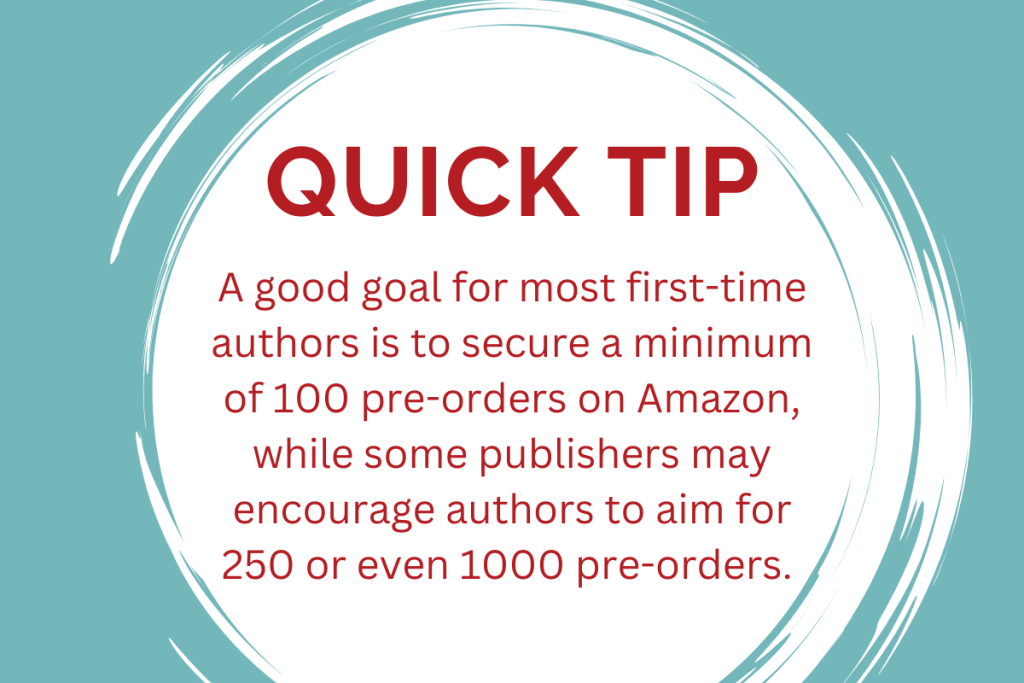
Typically, publishers set up your book for preorders 9 to 12 months in advance. This means anyone can find your book on online retailers and place an order, but the person placing the order will not receive it until it ships on your publication date.
Authors typically don’t have access to pre-order numbers through Amazon Author Central and will need to rely on their publisher or publicist for updates. Sales rank movement on Amazon during the pre-order period can provide limited insight into which early promotions are working.
Why Pre-Orders Matter to Publishers
Publishers use pre-orders to guide:
- Initial print runs
- Sales forecasting
- Retail stocking
Low pre-order activity can result in fewer copies being stocked at launch, which can create availability issues during release week.
What Authors Can Influence
While the publisher controls many of the mechanics around the pre-order period, authors still play an important role in how they promote their book during the pre-order window.
Here are some ideas:
- Network Mobilization (one-on-one outreach to your connections)
- Email and Social Media Marketing (share retailer links to help promote the book)
- Use Many Retailers (expand retailer links beyond just Amazon)
If a national bestseller list is a goal, then spreading pre-orders across multiple retailers is especially important.
“It’s important to honor the investment that a traditional publisher is making in you and do everything you can to drive sales for your book.”
—Becky Robinson, CEO, Weaving Influence
Print and Bulk Pre-Orders
If you’re offering a print, ebook, and audio version of your book, you may be wondering whether these sales all count the same. The short answer? Not always. While all formats contribute to overall sales, print pre-orders typically matter most for retailer stocking decisions and for many major bestseller lists.
For that reason, traditionally published authors usually prioritize print pre-orders during the launch period. Print sales are how retailers determine how many physical copies to stock, and they’re the primary format tracked by most industry reporting systems (such as BookScan).
As such, bulk pre-orders can also be particularly impactful and often begin six to nine months before launch. Authors pursuing bulk sales may partner with retailers like Porchlight Books or BookPal, which offer bulk discounts and report sales to BookScan. If you anticipate significant bulk orders, it’s important to keep your publisher informed so the initial print run can meet demand.
Now, what about hybrid or self-published authors? For authors who publish independently, the pre-order experience looks very different.
Pre-Orders for Self-Published and Hybrid Authors
As an author of a hybrid-published or self-published print-on-demand book, you may be wondering if pre-orders are important or how they can fit into your overall strategy for your book.
While self-published and hybrid authors often face similar distribution routes, pre-orders serve slightly different purposes depending on how much control you have and how your book is being positioned within your overall book launch strategy.
Pre-Orders for Hybrid Authors
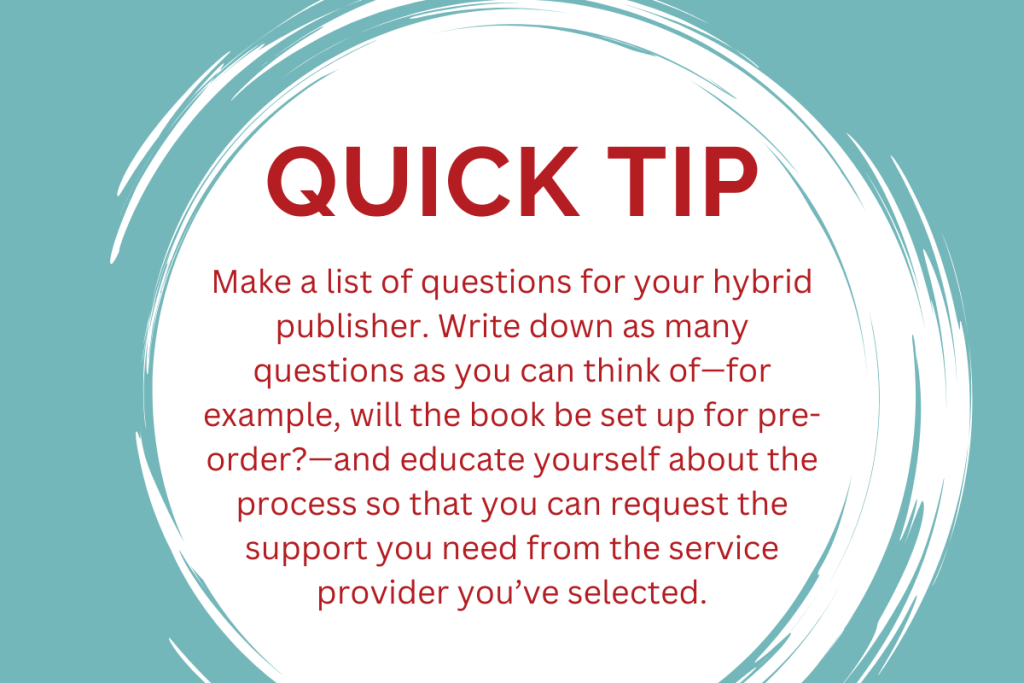
If you’ve chosen hybrid publishing with print-on-demand distribution, your publisher will likely have an already established stance on pre-orders.
Hybrid publishers either don’t offer print pre-orders at all or limit pre-orders to ebooks for a short window. And because retailers aren’t ordering print-on-demand titles in advance, pre-orders don’t carry the same sales or distribution advantages they do in traditional publishing.
As a result, hybrid authors often see less benefit from extended pre-order campaigns and instead focus more heavily on launch week activity.
Without a pre-order period, hybrid publishers will often load the book files a few days before the planned launch. This allows retailer algorithms to recognize the book (especially Amazon). It also provides a lot of uncertainty for authors who are actively trying to create excitement around the release of their book.
Pre-Orders for Self-Published Authors
Self-published authors typically have greater flexibility and decision-making power when it comes to pre-orders. This can be an advantage, but it does require a more strategic approach.
For self-published, print-on-demand authors, pre-orders are not the sole driver of success. In fact, too much focus on pre-orders can dilute launch week momentum, which is often the most critical window for visibility and category rankings on Amazon.
Instead, many self-published authors focus on:
- Prioritizing first-week sales over early orders
- Actively engaging their network during launch week
- Using pre-orders selectively, rather than as the main focus
This approach is especially effective for self-published authors aiming to reach bestseller status on Amazon, where launch-week sales matter more than early activity, as concentrated sales in a short period signal strong demand and boost visibility in Amazon’s rankings.
“If you feel like you missed the boat because you didn’t have a pre-order period to prepare your marketing efforts, you also have the lifetime of your book to be able to share it with others.”
—Becky Robinson, CEO, Weaving Influence
Like most decisions in marketing a book, pre-orders work best when they’re used intentionally. Understanding the differences between self-published and hybrid models helps ensure they support, rather than complicate, your launch.
The Bottom Line
Book pre-orders aren’t a requirement for every author or every launch. They can, however, be a strategic book-marketing tool, positioning your book for success before, during, and after launch week. Pre-orders challenge you to connect more fully with your audience or identify where you need to grow your network for maximum engagement during your book’s release. How will you make pre-orders work for your launch?
Take Action
Not sure how pre-orders fit into promoting your book? Weaving Influence helps authors build launch strategies that are focused, realistic, and results-driven. Get in touch to see how we can support your next book launch.