

Information in this article is pulled from Episode 131 of The Book Marketing Action Podcast featuring Sarah Fay, a private Substack consultant.
What is Substack?
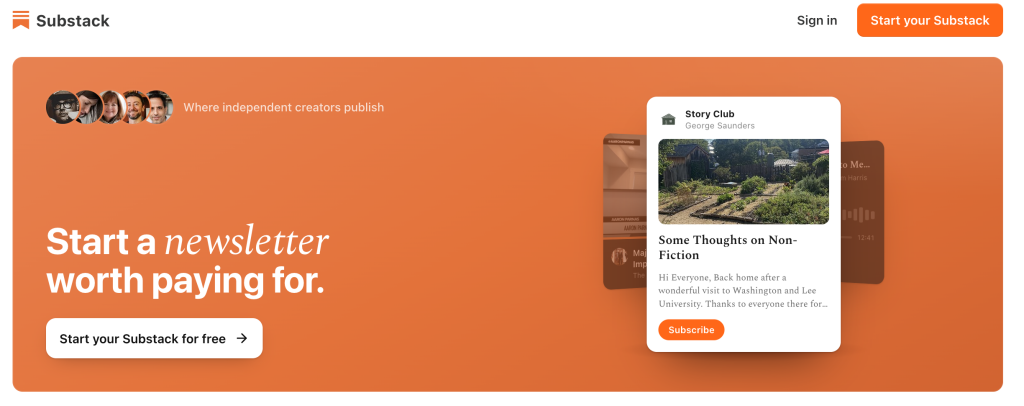
Substack is a platform that lets writers reach a wider audience, build a community, and earn income. It is a publication home for writers where they can publish a blog, create a website archive, send out an email newsletter, and even host a podcast or video series.
What makes Substack unique is that it sends your content directly to your subscribers’ inboxes, unlike social media, where you have to hope your content reaches your followers.
While it has gained popularity as a platform for independent writers to practice free speech, it has also faced criticism. Some writers have raised concerns about how the platform handles controversial content and its potential to amplify harmful voices. However, Substack has taken steps to address these concerns and keep the platform a space for free speech while maintaining a safe, inclusive environment.
For many writers, Substack is a valuable platform that can help them reach a wider audience and build a community of readers. It offers a unique opportunity for writers to earn income and share their work directly with subscribers, while connecting with readers who are genuinely interested in their writing.
Types of Content on Substack
Articles and Posts – Longer-form pieces of content like essays, stories, advice, interviews, book excerpts, reviews, and commentary. You can publish them on your Substack website, send them to subscribers by email, or both. Posts can be free or restricted to paid subscribers.
Newsletters – A traditional email newsletter format, where you can send a newly published post to your subscribers. However, you can post the same piece of content as an article or a newsletter.
Notes – These are brief posts where you can share your thoughts, questions, quotes, links, images, or videos. These live on a feed similar to X or Threads and give you an element of discovery instead of going directly to your subscribers.
Podcasts and Audio – You can publish audio episodes, record conversations, and create a podcast feed. Readers can listen on Substack and through supported podcast apps.
Video Posts and Livestreams – You can publish recorded videos, share video clips, or host live video sessions. These work well for author Q&As, book discussions, writing advice, and virtual events.
Pages and About Page – You can create an About page to explain who you are, what your publication covers, and why people should subscribe. You can also create other static pages, such as a book list, resource library, or contact page.
Substack Vs. Social Media
Unfortunately, social media is often all about competition. You compete to get your content seen, to post better content than similar pages, and to keep your audience’s attention. Substack offers a different approach to engaging with your audience. On Substack, people subscribe to your channel, and you send content directly to them.
Unlike Instagram or Facebook, where you have to hope the algorithm shows your new post to your followers, Substack connects your new content directly to your subscribers so you know they see it.
You can allow readers to access your content for free or offer an inexpensive subscription (typically $5-10 a month), which is how authors can make money on the platform. But what’s really exceptional about this model on Substack is that you keep 90% of the money you make from your subscribers.
“Subscribers are the people who are going to buy your book, whether they’re paid or free. Those are your people, and they’re going to champion your book, and it’s going to be the word of mouth that we all want. Versus social media, where I didn’t feel a connection with my followers at all.”
— Sarah Fay
How to Start a Substack
Step 1: Go to Substack.com and create an account.
Step 2: Choose a publication name, either related to your identity as an author, your newsletter, or a memorable phrase related to your brand.
Step 3: Write a short description of your page, what readers can expect from your content, and the kind of readers you want to connect with.
Step 4: Add your profile photo and update your branding visuals.
Step 5: Customize your publication with an About section and links to your website, book, course, etc.
Best Practices for Succeeding on Substack
Present Your Content in Multiple Formats.
Your subscribers have invited you into their lives—into their inbox—so how will you make your work stand out? While Substack has a lot of long-form content, people’s attention spans are short, especially online, so you should diversify and repurpose your content as much as you can to make it the most effective for your book marketing plan and goals. For example, if you write a blog or article, also:
- Record an audio version so your audience can listen and stay engaged, even when life gets busy.
- Send out an email newsletter announcing the new post and providing key takeaways.
- Share the new post on your Notes section so it’s on the social feed.
Use a Service Model to Increase Your Chances of Making Money.
If you’re a writer who wants to earn an income on Substack, you need a service model to increase your chances of making money. If you already have a Substack for your writing, consider creating another one focused on your specific area of expertise. This is where people will pay to learn from you. You can grow as both a writer and an expert, but sharing your expertise will help you grow faster.
Set Up Your Substack With a Goal in Mind.
Like any book marketing or thought leadership endeavor, you need a strategy for each goal you want to achieve, whether that’s promoting your book launch, offering workshops to earn money, or building a platform to attract an agent. Substack has opened up a more achievable way for writers to earn an income, but you must take a focused approach to succeed.
Before getting started, lay out a plan for the content you want to share over the first 1-3 months. This time is important to grow your content library, establish your expertise, and start growing your followers so you can convert them to paying subscribers.
Six Benefits of Building a Platform on Substack
You Can Serialize Your Work.
To serialize means to publish a story in multiple installments. If you choose to take this approach, make sure your content is bite-sized and that each installment feels like a complete experience. Not everyone will sit down at their computer to read a full-length chapter every week, and they may not have time to read every installment. That is why it’s important to hold their attention with digestible content that feels complete, even though it’s part of a larger story.
Substack Wants Everyone to Succeed on the Platform.
Users don’t pay a monthly fee; instead, they pay a percentage of each paid subscriber they get. This means that Substack wants you to succeed and grow a large audience because it’s how they make their money. People subscribe to you, the writer, not the platform itself.
Other Writers Want to See You Succeed on the Platform.
The belief is that there are plenty of subscribers to go around, so why not amplify other people in your field? It is a highly supportive environment. As Sarah Fay says, “The reason that I love Substack—and I am not a social media person at all, and I wasn’t much of a blogger because I always felt like I was talking to no one—is the support that’s on there. The general feeling is that there are plenty of subscribers to go around, and all we do is support each other.”
Substack Gives You a Reason to Write.
When you publish on Substack, you are creating content for people—for the audience you have established and have developed a relationship with. Writing is not a solitary experience when you have a real, engaged audience cheering you on throughout the journey.
You Can Sell Your Books Off the Backlist.
If your book has been out for a while and you want to take another approach to boosting sales and revitalizing your book marketing plan, create a Substack. Don’t let your work fade out. Amplify your message by growing a Substack audience. Subscribers are the people who are going to buy your book and champion your work. For Sarah Fay, Substack was critical to promoting her books, saying, “My book had three months to hit, and that was it. Substack has given us an opportunity to sell our books off the backlist, where normally they would just go there to die.”
It’s About Quality, Not Quantity.
You do not need to constantly be posting new content on the platform. The main goal is to share work that is valuable for your audience, so be intentional and don’t feel like you need to show up in your subscribers’ inboxes every single day.
The Bottom Line
Substack is a publication platform where authors and thought leaders can share blogs, newsletters, podcasts, videos, and more to grow a loyal readership and execute an effective book marketing plan. Engaging meaningfully with your audience on social media can be difficult, but Substack delivers your content directly to your subscribers, free and paid, so they stay engaged with what you have to say.
It’s easy to get started on Substack, and you can repurpose your content across the platform to connect with your audience in the way that resonates best with them. Plus, once you gain a steady following, you can charge an affordable monthly subscription fee and keep 90% of that as profit.
We highly recommend giving Substack a try to promote your upcoming book or backlist, engage with readers and fellow writers, and revitalize your enjoyment of writing and sharing your stories online.
Take Action
We hope this guide has been a helpful resource for getting started on Substack! To learn more, please check out Episode 131 of The Book Marketing Action Podcast, where Sarah Fay, a private Substack consultant, goes in-depth about all these Substack topics and more.
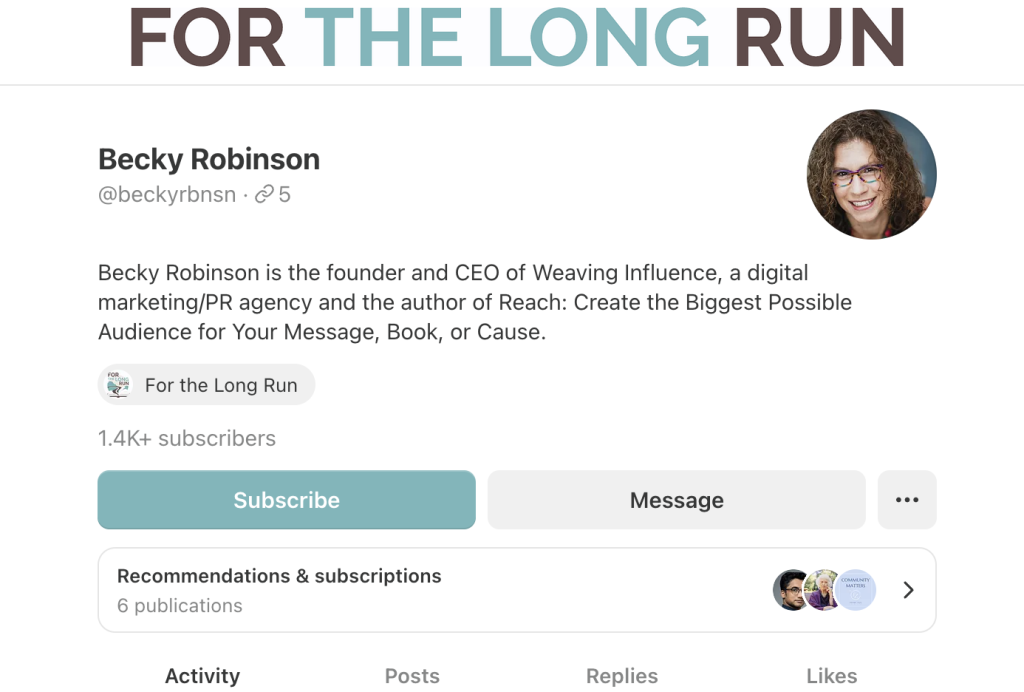
You can also follow our CEO and founder, Becky Robinson, on Substack for valuable insights on book marketing and hybrid or self-publishing advice.
If you’re writing a book and seeking a publisher, need help with your book launch, or want an experienced team for marketing your book, we hope you’ll contact us. We offer publishing services, social media management, email marketing, public relations, and more to make your book a success.
Sarah Fay is a private Substack consultant, an award-winning author at HarperCollins, and a member of the faculty at Northwestern University. She publishes the bestselling newsletter Substack Writers at Work, where she helps people use the personal media platform Substack to sell their books, earn an income, build a loyal community of readers, and have the writing careers they want. Check out her serialized book, Cured, and sign up for her brand-new course, “Your Substack Success Blueprint: Create, Design, and Grow Your Substack.”